Table of Contents
Dental pain can stop your day. A broken tooth, bleeding gums, or swelling can send you rushing for help. Many of these emergencies do not come out of nowhere. They build over time when small warning signs go unchecked. This blog explains how simple preventive care helps you avoid that panic. You will see how cleanings, checkups, and daily brushing protect you from sudden toothaches, infections, and costly treatments. You will also learn how services like Invisalign in Fairfield, CA fit into a prevention plan by keeping your bite healthy and easier to clean. When you understand the link between routine care and emergencies, you gain control. You lower risk. You protect your comfort, your budget, and your peace of mind.
How Dental Problems Turn Into Emergencies
Most emergencies start small. A tiny cavity. Sore gums. A chipped tooth. You might ignore these changes. You might hope they fade. Instead they grow.
Here is what often happens.
- Soft plaque stays on your teeth. It hardens into tartar that you cannot remove at home.
- Bacteria in plaque produce acid. That acid eats through enamel and forms cavities.
- Germs move deeper into the tooth or under the gums. Infection builds and pressure rises.
The result can be a deep ache, a cracked tooth, or a swollen face. You might need a root canal or an extraction. You might need urgent antibiotics. A problem that was simple to treat months ago now needs fast, complex care.
What Counts As Preventive Dental Care
Preventive care is anything you do early to stop problems before they get worse. It includes what you do at home and what happens at the dental office.
At home you can:
- Brush twice a day with fluoride toothpaste.
- Floss once a day to clean between teeth.
- Limit sugary drinks and snacks.
- Drink tap water with fluoride when it is available.
At the dental office you can:
- Get regular checkups and cleanings.
- Ask about fluoride treatments.
- Ask about sealants for children’s back teeth.
- Review how teeth fit together and how you bite.
The Centers for Disease Control and Prevention explains how sealants protect children’s teeth from decay and future pain. You can read more at CDC dental sealant facts.
How Prevention Cuts Emergency Risk
Each small step with preventive care lowers your chance of a crisis. It does this in three direct ways.
- You catch problems early when they are easier to treat.
- You remove plaque and tartar before they cause deep damage.
- You strengthen teeth so they resist cracks and decay.
Routine care also helps you notice changes. A new spot. A sore gum. A loose filling. You can call your dentist before pain grows. This short visit can prevent a late night emergency trip.
Comparing Preventive Care And Emergency Treatment
Preventive visits and emergency visits feel very different. The table below shows common differences. These are examples, not exact prices. Costs and times vary by clinic and by person.
| Type of visit | Typical reason | Time in chair | Relative cost | Comfort level
|
|---|---|---|---|---|
| Routine checkup and cleaning | Stay healthy and catch small issues | 30 to 60 minutes | Low | Mild |
| Filling for a small cavity | Early tooth decay caught on exam | 30 to 45 minutes | Moderate | Mild to moderate |
| Root canal | Deep infection from untreated decay | 60 to 90 minutes or more | High | Moderate |
| Emergency extraction | Severe break or infection | 30 to 60 minutes | High | Moderate to intense |
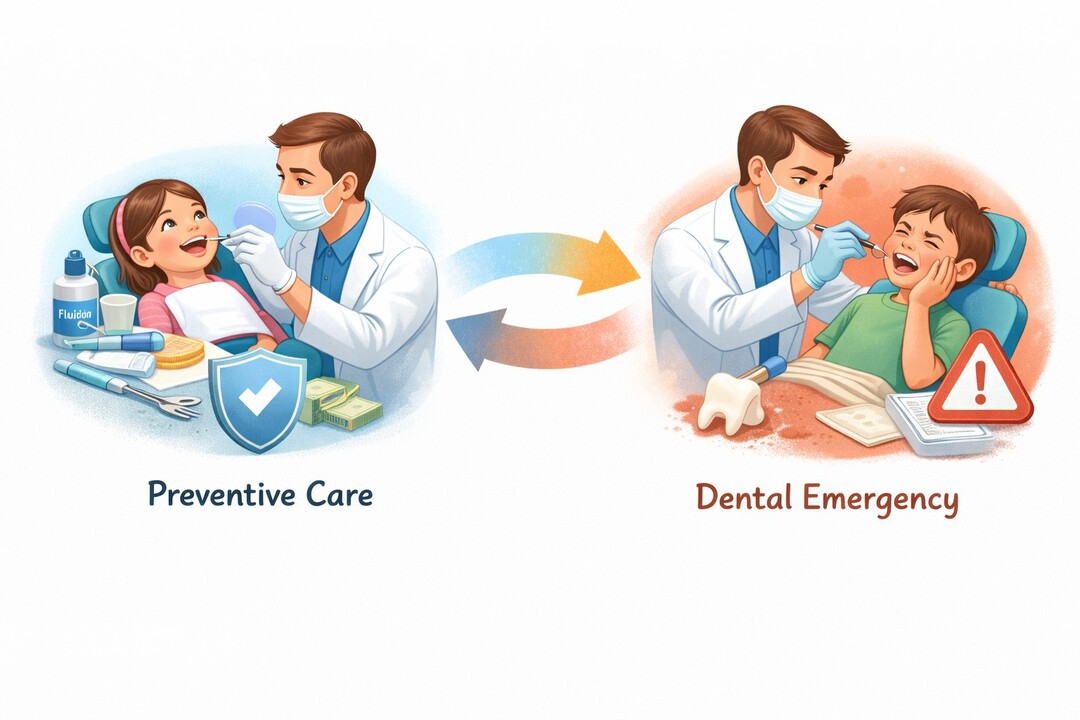
Preventive care is shorter, calmer, and less costly. Emergency care is longer, more stressful, and more expensive. You choose which path is more common for you.
How Orthodontic Care Helps Prevent Emergencies
Crooked or crowded teeth are hard to clean. Food gets stuck. Plaque hides in tight spaces. Over time this raises your risk of cavities, gum disease, and broken teeth.
Orthodontic treatment like clear aligners or braces can straighten teeth. When teeth line up, brushing and flossing work better. Your bite also spreads pressure across teeth in a safer way. This lowers the chance of cracks and uneven wear.
Clear aligners need you to keep up with hygiene. You brush and floss after meals before you put trays back in. This habit protects you from decay while you improve your bite.
Preventive Care For Children And Older Adults
Different stages of life bring different risks. Children and older adults need special focus.
For children you can:
- Start dental visits by the first birthday or when the first tooth appears.
- Use fluoride toothpaste in a small amount as directed.
- Ask about sealants on permanent molars.
- Limit juice and sticky snacks.
For older adults you can:
- Check that dentures or partials fit well.
- Watch for dry mouth from medicines.
- Schedule regular exams even with few natural teeth.
- Report any sore spots, lumps, or white patches.
The National Institute of Dental and Craniofacial Research shares clear guidance for all ages at NIDCR adult oral health.
When To Seek Emergency Dental Care
Preventive steps reduce risk, but emergencies can still happen. You should seek urgent care if you notice any of these signs.
- Severe tooth pain that does not ease.
- Swelling of the face or jaw.
- Bleeding that does not stop.
- Knocked out or cracked tooth.
- Signs of infection such as fever or trouble swallowing.
If breathing or swallowing is hard, call emergency services right away. Do not wait. Fast action can protect your health and sometimes your life.
Simple Steps You Can Take Today
You can start preventive care today with three simple actions.
- Set a date for your next dental checkup and cleaning.
- Brush for two minutes twice a day and floss once a day.
- Cut back on sugary drinks and choose water more often.
Each small step lowers your chance of a painful emergency. You protect your mouth. You protect your time. You protect the people who depend on you.