Table of Contents
When your pet is in trouble, you do not want guesswork. You want clear steps and fast help. General vets handle many emergency and urgent care needs every single day. They stop bleeding. They ease pain. They treat shock. They do this while also guiding you through hard choices. In Roanoke, VA veterinary teams see sudden injuries, breathing problems, poison risks, and seizures during regular hours and after hours. They sort out what is truly life threatening and what is urgent but stable. Then they act. First they check breathing, heart, and bleeding. Next they control pain and support your pet. Finally they plan tests and treatment. This blog explains how general vets respond in those first tense minutes, what you can expect when you rush in, and how you can prepare before a crisis hits.
What Counts As An Emergency Versus Urgent Care
General vets see two main types of sudden problems. Some are true emergencies. Others are urgent but not yet deadly. You need to know the difference so you can move fast and speak clearly on the phone.
Common pet emergencies include:
- Not breathing or struggling to breathe
- Uncontrolled bleeding
- Collapse or cannot stand
- Seizures that last more than a few minutes
- Suspected poisoning or antifreeze exposure
- Hit by a car or fall from height
- Bloated hard belly with restlessness and retching
Common urgent problems include:
- Limping but still walking
- Small cuts that stop bleeding
- Vomiting or diarrhea in a bright alert pet
- Ear infections
- Eye redness or mild squinting
- Sudden thirst or peeing more than normal
You can review more warning signs in this guide from the U.S. Food and Drug Administration. It explains common pet risks at home.
How General Vets Triage Your Pet
When you walk in or call, staff start triage. Triage means they rank pets by how fast they need help. This can feel harsh when you wait. It protects the pet who might die without fast care.
Staff ask short clear questions.
- Is your pet breathing
- Is your pet awake and able to stand
- Is there heavy bleeding
- Did a car hit your pet or did your pet eat a toxin
Next they look at your pet for a fast check.
- Breathing rate and effort
- Gum color
- Heart rate
- Level of response
If your pet is unstable, they move your pet to treatment right away. Paperwork waits. If your pet is stable, you wait while they handle life threatening cases first.
First Steps In Emergency Care
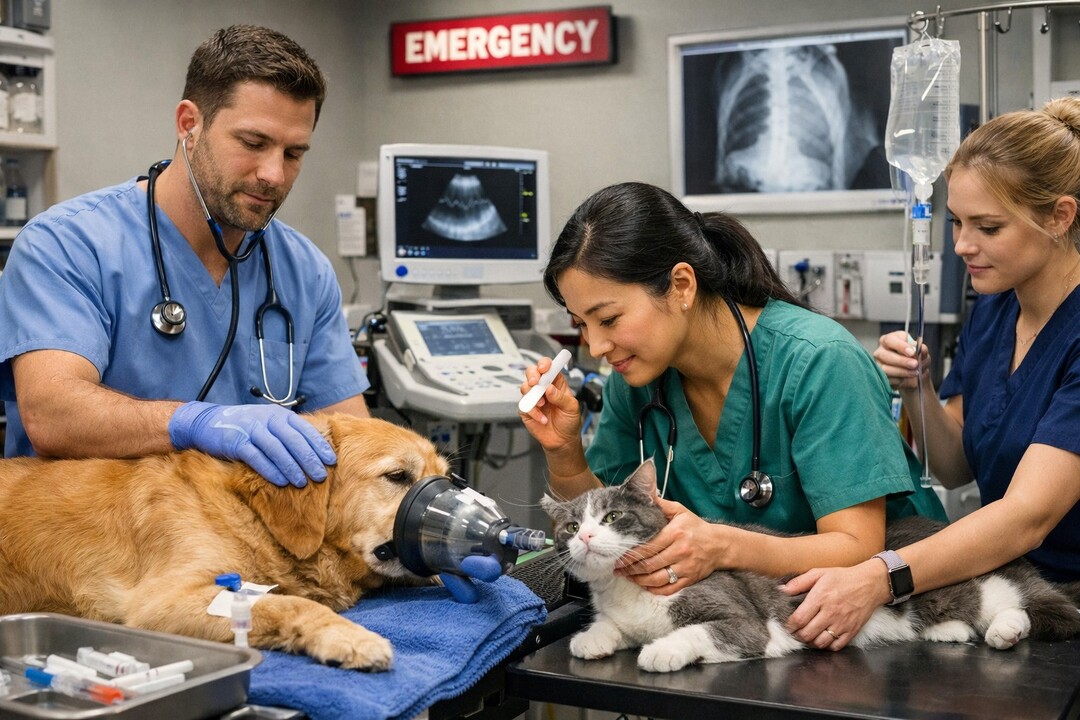
General vets follow a simple order. They focus on life support before anything else. They treat in this order.
- Airway. They clear the mouth. They open the airway. They place a breathing tube if needed.
- Breathing. They give oxygen. They watch chest movement. They listen to the lungs.
- Circulation. They control bleeding. They place IV lines. They start fluids to support blood flow.
Only once those steps are stable do they move to tests. That may include blood work, x rays, or ultrasound. They explain each step in plain words and ask for consent when choices involve cost or risk.
Common Tools General Vets Use In Emergencies
General vets do not work with guesswork. They use clear tools and set methods.
- IV pumps for controlled fluids
- Oxygen cages or masks
- Heart and oxygen monitors
- Pain control medicines
- Anti seizure medicines
- Wound cleaning and stitching supplies
They also call poison control when needed. The ASPCA and other centers guide treatment for many toxins. For some poisons, such as certain drugs, they use data from sources like the Merck Veterinary Manual to support care.
Emergency Versus Urgent Visit: What To Expect
The table below shows how a true emergency visit often differs from an urgent visit at a general clinic.
| Type of visit | Examples | How fast staff act | Common first steps | Possible outcome
|
|---|---|---|---|---|
| Emergency | Hit by car, not breathing, seizure, bloat | Seen right away on arrival | Airway support, oxygen, IV line, pain control | Hospital stay or transfer to 24 hour center |
| Urgent | Limping, mild vomiting, small cut, ear pain | Seen as soon as a room opens | Exam, basic tests, medicine, wound care | Home care with recheck if needed |
When Your Vet Stabilizes Then Refers
General vets can handle many crises from start to finish. Sometimes your pet needs round the clock care or surgery that only a specialty center can give. In those moments your vet stabilizes first. Then they arrange transfer.
Stabilizing often includes:
- Stopping bleeding
- Starting fluids
- Giving oxygen
- Controlling pain and seizures
- Placing a urinary catheter or feeding tube if needed
Only once your pet is steady enough to move do they send you to a 24 hour hospital. They share records and x rays so you do not repeat tests unless needed.
How You Can Prepare Before A Crisis
You cannot stop every emergency. You can still cut risk and stress. You can keep this short checklist at home.
- Know your regular vet hours and phone number
- Know the closest 24 hour animal hospital
- Keep a pet first aid kit with bandage material, muzzle, and copy of vaccine records
- Store common toxin hotlines and local emergency contacts
- Plan transport for a large dog, such as a blanket stretcher
You can also learn basic pet first aid and CPR through local programs. The Centers for Disease Control and Prevention offers guidance on staying safe with pets and avoiding bites and infections at home.
What To Say When You Call The Vet
Your words on the phone can change how fast your pet gets help. Be short and clear. Share three key points.
- What happened and when
- What your pet is doing right now
- Any poisons, drugs, or trauma involved
You can use a simple script.
“My dog was hit by a car ten minutes ago. He is breathing fast and cannot stand. There is bleeding from his back leg.”
This type of call lets staff start planning even before you arrive.
Staying Calm When Every Second Hurts
Panic is human. Your pet feels your fear. You can still take control of the next step. Focus on three moves.
- Secure your pet and prevent bites with a towel or soft muzzle
- Call the vet and say the key facts
- Move with care and drive with focus
General vets train for these hard days. They know you carry fear and guilt when your pet hurts. They meet you with clear steps, honest talk, and steady care. You do not face those minutes alone.