Table of Contents
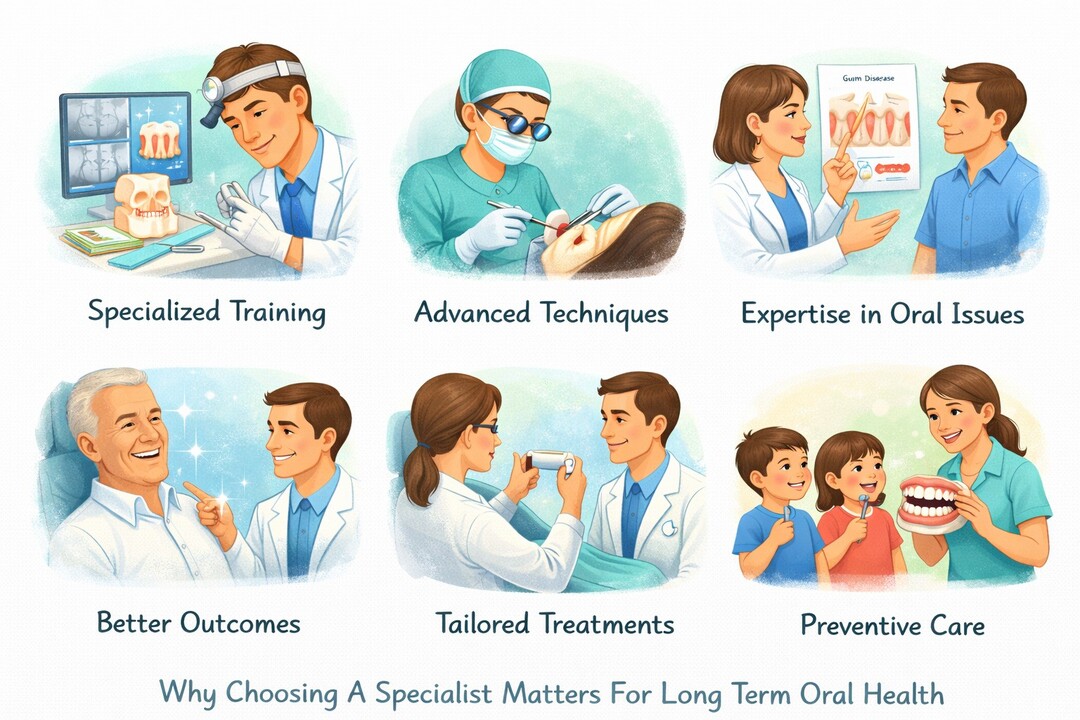
Your mouth holds your stories, your stress, and your health. When you ignore problems or rely on quick fixes, pain grows, teeth shift, and small issues turn into hard choices. Choosing a specialist for your oral health changes that path. You get focused training, steady hands, and clear answers. You also get a plan that protects you years from now, not just today. Whether you need implants, gum treatment, root surgery, or dentures in Surrey, BC, the right expert looks at how every part of your mouth connects. Then the expert treats the cause, not just the symptom. This careful approach lowers your risk of tooth loss, infections, and costly repeat work. It also protects how you eat, speak, and smile as you age. You deserve care that lasts, not care that only gets you through the week.
Why long term oral health should matter to you
Your mouth affects how you eat, sleep, speak, and work. It also links to heart disease, diabetes, and pregnancy problems. The Centers for Disease Control and Prevention shows that poor oral health connects to many chronic health problems. So when you protect your teeth and gums, you also protect your body.
Short term fixes might stop pain for a moment. Yet they often ignore the cause. Then cavities spread, gums pull back, and bone thins. You might lose teeth that you could have saved. A specialist looks past today. You get care that supports your mouth over years.
What makes a dental specialist different
A general dentist handles routine checkups, fillings, and simple repairs. A specialist finishes extra years of training in one focus. You see this in fields like:
- Periodontists. Treat gum disease and bone loss around teeth.
- Endodontists. Treat tooth nerve pain and root canals.
- Prosthodontists. Plan and place crowns, bridges, implants, and dentures.
- Orthodontists. Guide tooth and jaw alignment.
- Oral surgeons. Handle extractions and jaw surgery.
This deeper training means the specialist sees patterns fast. You get fewer surprises. You also get treatment that fits your mouth, your health, and your budget.
How specialists protect your future, not just today
Every choice in your mouth has a chain reaction. Pull one tooth without a plan and nearby teeth can shift. Place a filling that is too large and the tooth can crack later. A specialist thinks about three things at once.
- How to stop pain or infection today.
- How to protect tooth strength and bone support.
- How your bite, speech, and smile will work years from now.
This kind of planning reduces repeat work. It also lowers your risk of emergency visits that disrupt your family and your wallet.
Common oral health problems and who should treat them
You might wonder when a specialist is worth it. Here is a simple guide that you can use when you talk with your dentist.
| Problem | Typical first step | When to see a specialist | Specialist type
|
|---|---|---|---|
| Bleeding gums | Cleaning and home care review | Gums still bleed or recede after care | Periodontist |
| Deep cavity or toothache | Exam and simple filling | Pain lingers or infection reaches nerve | Endodontist |
| Missing teeth | Talk about bridges or simple dentures | More than one tooth missing or complex bite | Prosthodontist |
| Crooked teeth or crowded jaw | Referral after routine exam | Any bite problem that affects chewing or speech | Orthodontist |
| Impacted or broken teeth | X rays and pain control | Tooth under bone or near nerves | Oral surgeon |
Why this matters for children and older adults
Children and older adults carry special risk. The National Institute of Dental and Craniofacial Research reports that many children have untreated decay. Many older adults lose teeth and face gum disease. You can change that pattern in your family.
For children, early orthodontic and preventive visits guide jaw growth. A specialist can spot breathing issues, grinding, or enamel problems. You protect your child from pain and missed school.
For older adults, bone loss, dry mouth, and medical drugs can weaken teeth. A prosthodontist or periodontist can plan implants, bridges, or dentures that fit your health and your daily life. You keep eating the foods you love. You also lower choking risk and stomach problems from poor chewing.
How to choose the right specialist
You might feel nervous about seeing a new provider. You can use three clear steps.
- Check training. Look for board certification and extra years of study in the focus you need.
- Ask about experience. Ask how often the specialist treats cases like yours.
- Review the plan. Ask for a simple explanation of choices, costs, and time.
You should feel heard. You should understand each step. You should never feel rushed into treatment that feels wrong for you or your child.
What you can expect during a specialist visit
You can prepare your family by knowing what usually happens.
- First, you share your story, pain, and goals.
- Next, the specialist reviews your records, takes images, and checks your bite.
- Then you receive a clear plan with choices and timelines.
You can bring a written list of questions. You can ask about healing time, home care, and what to do if pain worsens. A good specialist answers with patience and plain language.
How to protect your investment in care
Specialist care can cost more at the start. Yet it often saves money over time. You reduce failed work, repeat root canals, and rushed extractions. You also protect your ability to chew, speak, and smile with confidence.
You can protect your investment through three habits.
- Keep regular checkups and cleanings.
- Follow home care advice on brushing, flossing, and diet.
- Call early when you notice changes in pain, swelling, or fit.
Taking your next step
You do not need to live with mouth pain, loose teeth, or dentures that hurt. You have a right to clear answers and long lasting solutions. You can start by asking your regular dentist if a specialist visit makes sense. You can also seek a second opinion when the plan feels rushed or unclear.
Your choices today shape how you eat and smile years from now. When you choose a specialist for complex needs, you choose stability, safety, and strength for your mouth and your life.