Table of Contents
Routine wellness exams protect your pet’s health before problems grow. During these visits, you and your veterinarian in Madison, GA work together to keep your pet safe, steady, and comfortable. First, staff check your pet’s weight, temperature, and heart rate. Next, the veterinarian looks at eyes, ears, teeth, skin, and joints. Then they listen to the heart and lungs and feel the belly for any hidden trouble. You hear clear answers about vaccines, parasite prevention, diet, and behavior. You also get simple steps you can follow at home. These exams may feel small, but they often catch sickness early, when treatment is easier and less draining. Regular visits build trust. Your pet learns that the clinic is a place of care, not fear. You learn what to watch for between visits and when to call for help.
Why Routine Wellness Exams Matter
You bring your pet in for wellness exams for three clear reasons. You want early warning, steady care, and peace of mind. A wellness exam gives all three.
- Early warning. Many problems grow in silence. A quiet heart murmur, a small lump, or slow weight gain can point to trouble long before you see clear signs.
- Steady care. A set schedule for vaccines, parasite control, and lab tests keeps small issues from turning into emergencies.
- Peace of mind. You leave with clear answers instead of fear and guesswork at home.
The American Veterinary Medical Association explains that regular exams help catch disease early and support a longer life for pets.
What Happens Before the Exam
The visit starts before the veterinarian walks into the room. Staff gather key facts so the exam is sharp and focused.
- Check-in questions. Staff ask about eating, drinking, bathroom habits, activity, and any changes you notice.
- Weight check. They weigh your pet and compare the number with past visits.
- Basic checks. They record temperature, heart rate, and breathing rate.
You can help by bringing three things. Bring a list of questions, a record of any medicines or supplements, and a small photo of your pet’s usual stool if there is a concern. This keeps the visit honest and focused.
The Physical Exam Step by Step
During the exam, the veterinarian moves from nose to tail in a steady pattern. Each step has a purpose.
- Head and face. They look at eyes, ears, nose, and mouth for redness, discharge, or swelling.
- Teeth and gums. They check for tartar, broken teeth, and gum disease.
- Skin and coat. They look and feel for fleas, ticks, rashes, and lumps.
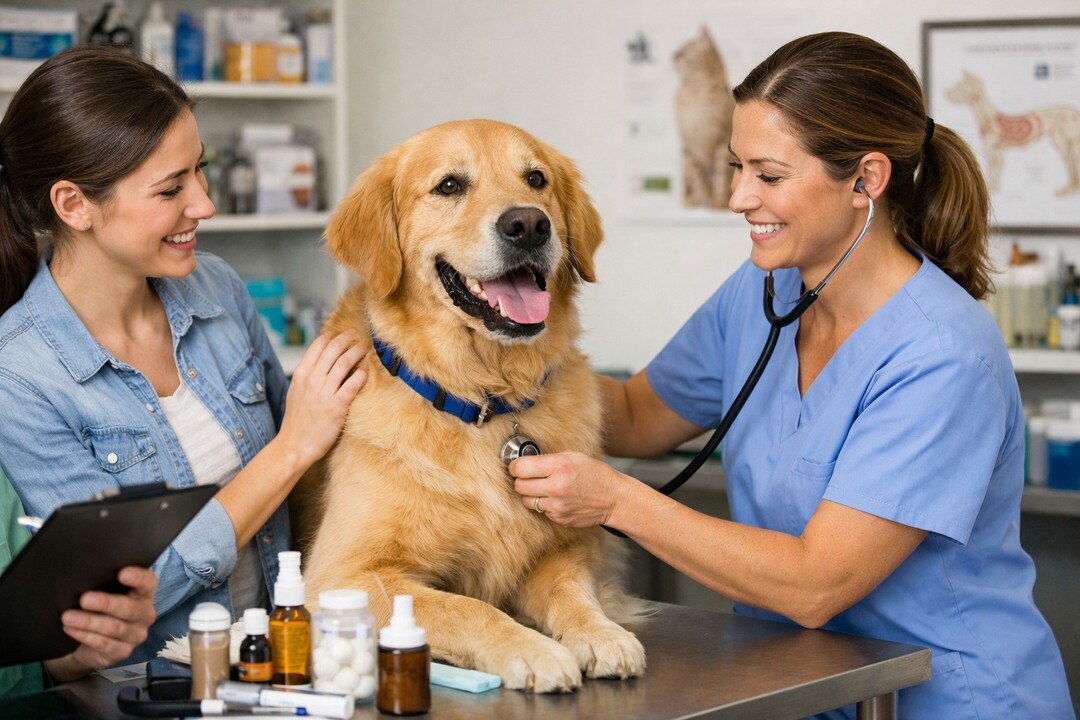
- Heart and lungs. They use a stethoscope to listen for murmur, skipped beats, or harsh lung sounds.
- Belly. They gently press the belly to feel the liver, kidneys, intestines, and bladder.
- Joints and muscles. They move each leg to check for pain, stiffness, or weakness.
- Weight and body shape. They score body condition to see if your pet is thin, normal, or heavy.
Each finding guides the plan. A clean exam leads to routine care. A concern leads to tests, treatment, or closer watch.
Common Tests During Wellness Exams
Many clinics offer simple tests during a wellness exam. These tests look quiet on the surface but show deep health details.
- Fecal test. Looks for worms and other parasites.
- Heartworm test. Checks for heartworm infection in dogs and sometimes cats.
- Blood work. Basic panels look at organs, red and white blood cells, and blood sugar.
- Urine test. Checks for kidney changes, infection, or crystals.
The Cornell University College of Veterinary Medicine explains that blood and urine tests can show early kidney and liver disease before signs appear.
Vaccines and Parasite Prevention
Wellness exams often include vaccines and parasite control. The plan depends on age, lifestyle, and risk.
Example Wellness Care by Life Stage
| Life Stage | Visit Frequency | Common Focus
|
|---|---|---|
| Puppy or Kitten | Every 3 to 4 weeks until vaccine series is complete | Core vaccines, deworming, nutrition, behavior basics |
| Adult Pet | Once a year | Exam, booster vaccines, heartworm and fecal tests, weight check |
| Senior Pet | Every 6 months | Exam, blood and urine tests, joint health, pain control, screening for cancer |
Core vaccines protect against common deadly diseases. Non core vaccines depend on where you live and how your pet lives. For example, outdoor cats may need different vaccines than indoor cats. Heartworm, flea, and tick prevention usually continue all year.
Costs and Value of Wellness Exams
Cost matters to every family. A wellness exam has a price. So does sickness. Often the exam costs less than treating a crisis later.
Typical Cost Comparison Example
| Service | Estimated Cost Range | Purpose
|
|---|---|---|
| Annual Wellness Exam | $50 to $90 | Full physical exam and guidance |
| Annual Vaccines | $60 to $120 | Prevent common infectious disease |
| Monthly Parasite Prevention | $10 to $30 per month | Protect from fleas, ticks, heartworm, and intestinal worms |
| Treatment for Preventable Disease | $500 to $2,000 or more | Hospital care, tests, and medicine for serious illness |
Costs vary by clinic and region. The pattern is steady. Prevention costs less than treatment. A wellness plan lets you spread costs and avoid surprise bills from preventable crises.
How Clinics Reduce Stress for Pets and Families
Many pets fear the clinic. Staff know this and use simple steps to ease stress.
- Gentle handling. Staff move slowly, use calm voices, and give breaks when needed.
- Treats and praise. Tasty food and kind words help your pet link the visit with good events.
- Quiet spaces. Some clinics have cat only rooms or separate dog and cat waiting spaces.
You can help by bringing your pet’s favorite small treats and a familiar blanket or carrier. You can also ask about waiting in your car until a room is ready.
How You Can Prepare for Each Visit
You play a strong role in every wellness exam. Three steps help the visit run smooth.
- Write down your top three questions.
- Track changes in eating, drinking, bathroom habits, weight, and mood.
- Bring any records from other clinics or shelters.
Honest answers guide smart care. If you feel worried about cost or medicine, say so. The veterinarian can adjust the plan or lay out options.
When to Call Between Wellness Exams
Wellness exams do not replace urgent care. Call the clinic right away if you see any of these signs.
- Not eating for more than a day.
- Vomiting or diarrhea that does not stop.
- Difficulty breathing or nonstop coughing.
- Straining to urinate or not passing urine.
- Sudden collapse, seizures, or severe pain.
Routine care and quick action work together. Wellness exams give your pet a strong base. Your watchful eye keeps that safety net tight between visits.