Table of Contents
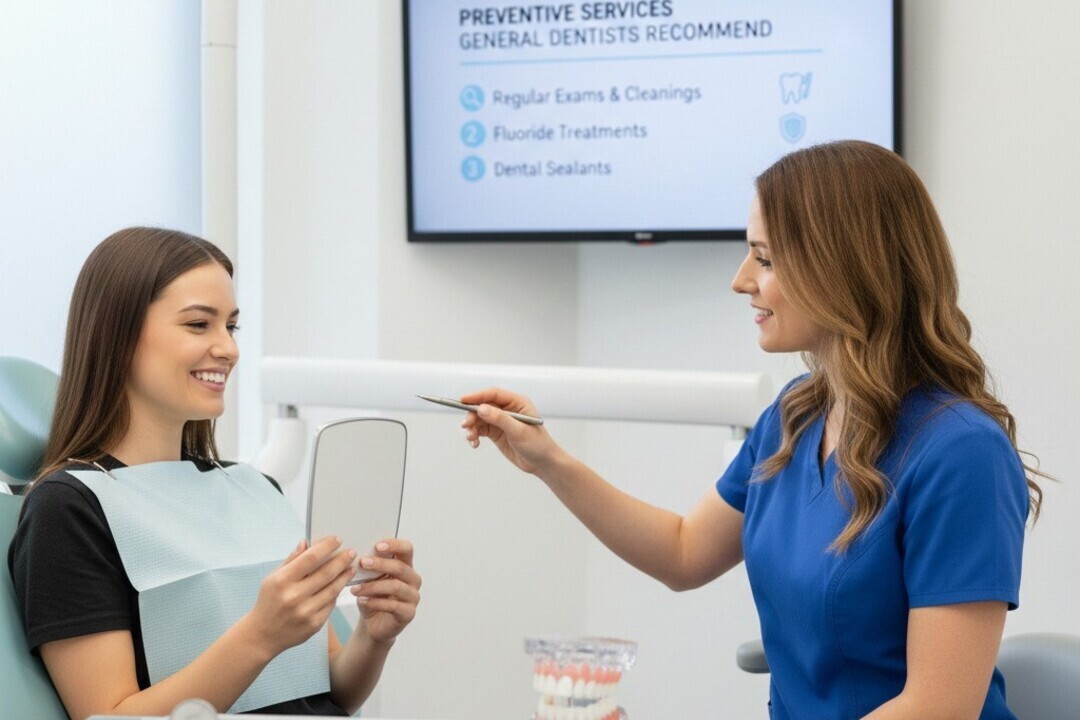
Your mouth needs steady care, not only quick fixes. Routine prevention keeps small problems from turning into pain, missed work, and high bills. A Wellston, Ohio dentist sees the same pattern every week. Patients wait until something hurts. Then the treatment is harder. You deserve better. Preventive services protect your teeth, gums, and health. They also give you control. Regular visits help you catch decay early, clear stubborn plaque, and check for warning signs of disease. These services are simple. They fit into a normal schedule. They also support your daily brushing and flossing at home. In this blog, you will see six preventive services general dentists urge patients to use. Each service has a clear purpose. Each one can cut risk and stress. You can use this list to plan your next visit and to ask focused questions about your own care.
1. Regular checkups and cleanings
Checkups are the basis of prevention. You sit in the chair. Your dentist and hygienist look for decay, gum disease, and signs of grinding. They also ask about your habits and your health history.
Cleanings remove plaque and tartar that brushing and flossing miss. The tools may feel sharp, yet the goal is simple. You leave with smoother teeth and fewer germs.
Most people need a visit every six months. Some need three or four visits each year. That choice depends on your risk. For example, the Centers for Disease Control and Prevention explains that untreated tooth decay and gum disease are common and can affect daily life.
During each visit, you can expect three basic steps.
- Exam of teeth, gums, and bite
- Cleaning above and below the gumline
- Guidance on brushing, flossing, and diet
2. Dental X-rays
X-rays let your dentist see decay, infection, and bone loss that hide under the surface. You cannot feel many of these problems at first. That is why X-rays matter.
Your dentist chooses how often to take X-rays. This depends on your age, your cavity history, and your current symptoms. Children often need them more often. Their teeth and jaws change fast.
The radiation from modern dental X-rays is low. Lead aprons and digital sensors reduce exposure. The National Institute of Dental and Craniofacial Research notes that early detection of decay can limit the need for complex treatment.
Use X-rays as a tool. Ask what each new set will show. Ask how the results change your care plan.
3. Fluoride treatments
Fluoride strengthens tooth enamel. Strong enamel resists acid from food and bacteria. You may get some fluoride from water and toothpaste. Yet some people need more support.
During a fluoride treatment, the dentist places a gel, foam, or varnish on your teeth. The process takes only a few minutes. You may need it every three, six, or twelve months.
Fluoride helps three groups most.
- Children and teens with growing teeth
- Adults with many fillings or past cavities
- People with dry mouth from medicines or health conditions
You can also ask if your tap water has fluoride. If it does not, your dentist may suggest extra fluoride at home.
4. Dental sealants
Sealants cover the grooves on the chewing surfaces of back teeth. Those grooves trap food and germs. Bristles often cannot reach them well. Sealants create a thin shield.
The process is simple. The dentist cleans the tooth. Then a solution helps the sealant stick. Next, the liquid sealant goes on the tooth and hardens under a special light. You feel no pain.
Sealants protect children. They also help adults with deep grooves or past cavities.
Sealants vs no sealants for back teeth
| Factor | With sealants | Without sealants
|
|---|---|---|
| Decay risk in deep grooves | Lower | Higher |
| Food and plaque trapping | Reduced | Common |
| Need for fillings | Less likely | More likely |
| Time needed to place | Short visit | Not applicable |
Ask when your child’s first and second molars came in. Then ask if sealants would help those teeth.
5. Gum disease prevention and care
Healthy gums hold your teeth in place. Gum disease starts with redness and bleeding. It can progress to bone loss and loose teeth.
Prevention focuses on three daily steps.
- Brush twice each day with fluoride toothpaste
- Clean between teeth with floss or another tool
- Limit sugary drinks and snacks
Your dentist may suggest special cleanings called scaling and root planing. These remove hardened deposits below the gums. This gives your gums a chance to heal.
If you smoke or use tobacco, your risk of gum disease rises. Talk with your dentist about support to quit. Even small changes can protect your mouth and your heart.
6. Oral cancer screenings
Oral cancer can appear on the tongue, cheeks, lips, or throat. Early cancer may not hurt. You might not notice a small patch or lump.
During an exam, your dentist looks and feels for changes in tissue. The exam is quick. You stay awake and alert. You may not even notice it unless your dentist explains each step.
Screenings help people who use tobacco or drink often. They also help anyone over age forty. Yet younger people can benefit too.
Call your dentist if you see any of the following for more than two weeks.
- Sores that do not heal
- Red or white patches
- New lumps or thick spots
- Trouble chewing or swallowing
How to use these six services
Prevention works when you pair office care with home care. You can use a simple three-step plan.
- Schedule regular visits and keep them
- Use fluoride toothpaste and clean between teeth each day
- Ask about sealants, extra fluoride, and screenings based on your risk
You do not need a perfect mouth to begin. You only need a clear decision to protect what you have now. Each preventive service gives you one more layer of defense. Each visit is a chance to avoid pain and keep your smile strong for work, school, and daily life.