Table of Contents
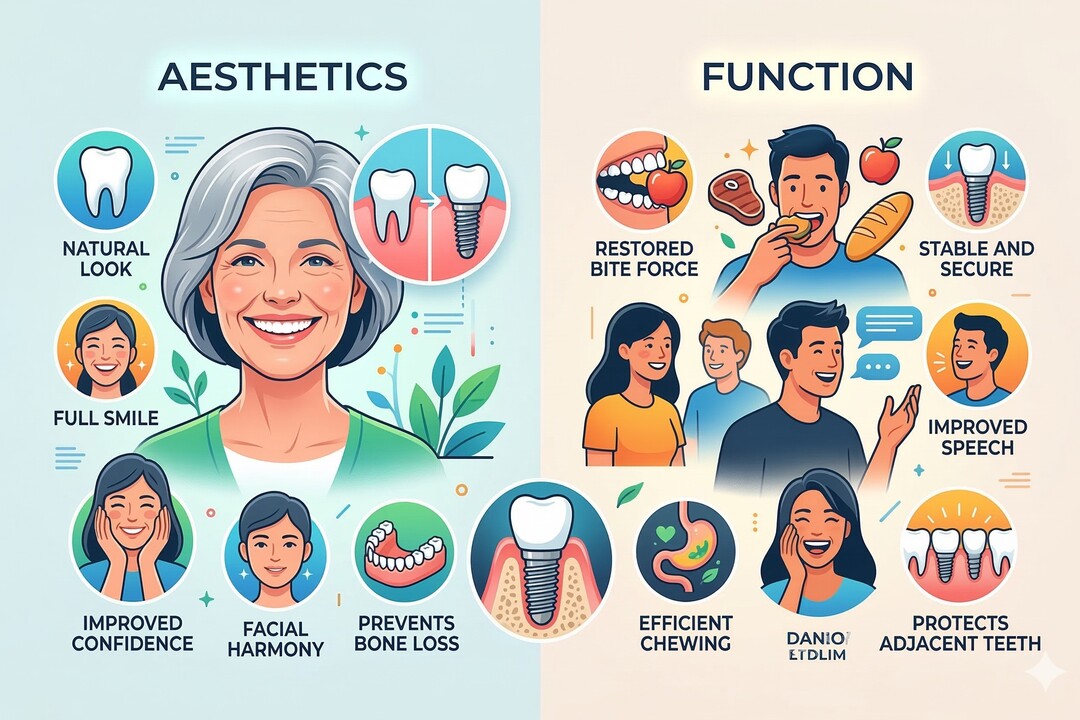
Tooth loss changes how you look, speak, and eat. It can drain your confidence and strain simple daily moments. Implant dentistry gives you a way to reclaim both your smile and your bite. You do not just fill a gap. You restore strength, balance, and comfort. Implants anchor to your jaw and support crowns that look like your own teeth. They stay in place when you talk and chew. They help keep your jaw from shrinking. They let you enjoy crisp food again. They let you smile without fear of slipping teeth. At the dental implant center at Walnut Creek, care focuses on three things. You gain a natural look. You gain steady function. You gain relief from constant worry about your mouth. This blog explains how implants work, what to expect, and how they can change your daily life.
What A Dental Implant Really Is
A dental implant has three parts. Each part has a clear job.
- The implant post. A small titanium piece that sits in your jaw and acts like a tooth root.
- The abutment. A connector that joins the post and the crown.
- The crown. The visible tooth that matches your other teeth.
The post fuses with your jaw through a natural healing process. The jawbone grows around the metal and locks it in place. This gives you a strong base for chewing. It also sends pressure into the bone when you bite. That pressure helps keep the bone from shrinking.
How Implants Restore Your Smile
Missing teeth change the shape of your face. Cheeks can sink. Lips can fold inward. Your jaw can look shorter. Implants support your facial shape by filling the empty space and helping protect the bone under the gum.
Implant crowns are shaped and colored to blend with your other teeth. Your dentist studies your smile line, your bite, and the way light hits your teeth. Then the crown is made to match.
With implants you can:
- Smile in photos without hiding your mouth.
- Speak without whistling gaps.
- Laugh without worrying about loose teeth.
The goal is not a perfect movie smile. The goal is a natural look that fits your face and age.
How Implants Restore Your Bite
Implants do more than fill space. They share chewing forces across your jaw. That protects your other teeth from overload.
When a tooth is missing, nearby teeth can tilt or drift. The bite can shift. You may start chewing on one side only. That can strain your jaw joints and muscles. A stable implant helps keep your bite centered and even.
With a well-planned implant, you can:
- Bite into firm food.
- Chew on both sides of your mouth.
- Speak clearly without extra effort.
Implants Compared With Other Tooth Replacements
You may wonder how implants compare with bridges and dentures. The table below shows key differences.
| Feature | Dental Implants | Fixed Bridge | Removable Denture
|
|---|---|---|---|
| Support | Anchored in jaw bone | Anchored to nearby teeth | Rests on gums |
| Bone protection | Helps slow bone loss | Does not protect bone under a missing tooth | Often linked with faster bone loss |
| Effect on healthy teeth | Usually none | Often needs grinding down nearby teeth | None on teeth, but can rub gums |
| Stability when eating | Very steady | Steady | Can move or slip |
| Cleaning | Brush and clean between like natural teeth | Brush and use floss tools | Remove to clean |
| Typical use time | Long term with good care | Many years with care | May need more frequent changes |
Who Might Benefit From Implants
Not every person is a good match for implants. Yet many people are. You may benefit if you:
- Have one or more missing teeth.
- Wear dentures that slip or hurt.
- Have trouble chewing food you enjoy.
- Notice changes in your face shape after tooth loss.
Your dentist will study your health history, your gum health, and your bone levels. Some people need bone grafting first. Others can receive implants with the bone they have.
What To Expect From The Process
The implant process has clear steps. Each step has a purpose.
- Planning visit. You receive an exam and scans. You talk about your goals and options.
- Placement. The dentist places the implant post in your jaw.
- Healing. Bone grows around the post. This can take several months.
- Abutment and crown. The dentist attaches the connector and the custom crown.
During healing, you may wear a temporary tooth. You still clean your mouth each day. You still see your dentist for checks.
How To Care For Implants
Implants need daily care just like natural teeth. Poor care can lead to gum infection and bone loss around the implant.
Key steps include:
- Brush twice each day with a soft brush.
- Clean between teeth and around the implant each day.
- Keep regular dental visits for cleanings and exams.
- Do not smoke or vape. These raise the risk of implant failure.
Your dental team can show you special brushes or floss holders that make cleaning easier.
Taking The Next Step
Tooth loss can feel lonely. It can make you pull back from meals, photos, and close moments. You deserve a mouth that feels strong and looks natural. Implant dentistry gives you a steady way forward.
You can start by asking your dentist a simple question. Ask if your jaw and gums can support implants. Then ask what results you can expect and what the full plan would look like. With clear facts and a careful plan, you can choose care that restores both your smile and your bite.