Table of Contents
Your child’s teeth affect how they eat, sleep, speak, and feel. Every day, small choices at home either protect those teeth or slowly damage them. You cannot control everything, but you can shape simple habits that guard your child from pain, missed school, and high bills later. This guide shares five practical steps you can use today. Each step fits into real life. No special tools. No complex routines. Just clear actions that you can repeat morning and night. You will see how to guide brushing, handle snacks, use water, talk about sugar, and work with your Villa Park family dentist. You do not need perfect teeth to raise a child with a strong smile. You only need steady effort, honest information, and a plan you can keep. The next sections show you exactly where to start and how to stick with it.
1. Make Brushing a Two Times a Day Habit
Tooth decay is common in children. It is also preventable. Daily brushing is your strongest tool.
Use this simple plan.
- Brush two times a day for two minutes
- Use a soft toothbrush that fits your child’s mouth
- Use fluoride toothpaste in a rice sized amount for kids under three and a pea sized amount for kids three and older
Younger children need your help. You can let them brush first. Then you finish. You stay in charge until your child can write in clear small letters. That skill shows that they can control the brush well.
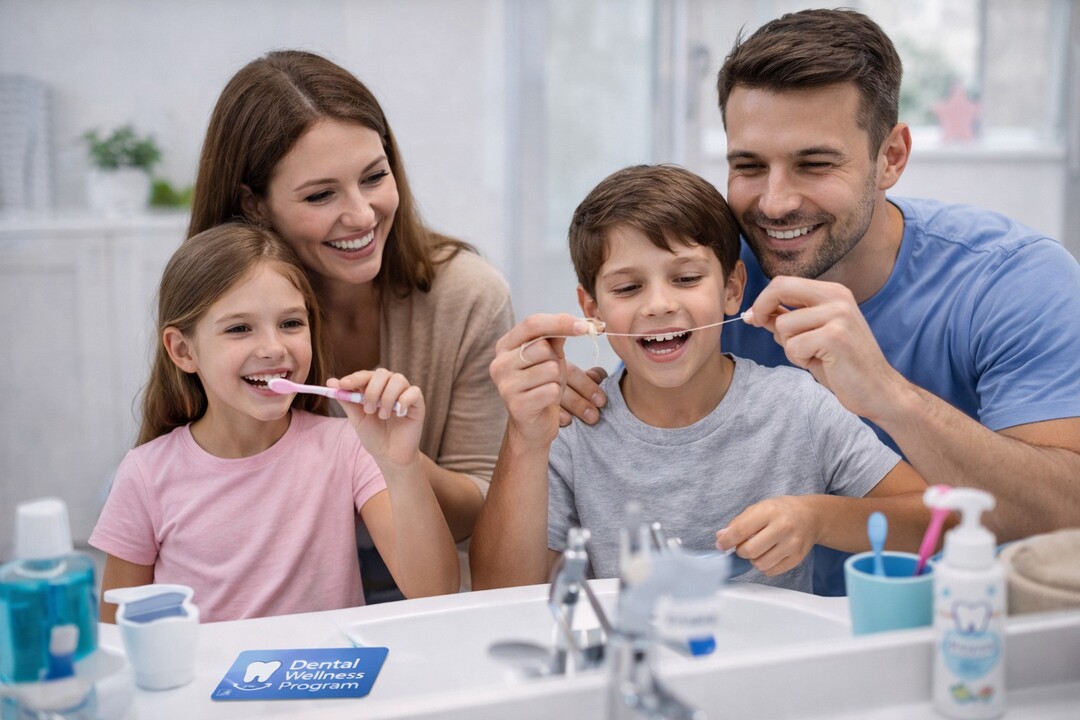
Set a timer or use a short song. That keeps the two minutes clear and fair. You can stand in front of a mirror together. You show the motions. Small circles on all sides of each tooth. Gentle strokes along the gumline. Do not scrub hard. Pressure hurts gums and does not clean better.
The Centers for Disease Control and Prevention explains that fluoride toothpaste and regular brushing lower the risk of cavities for children and teens.
2. Turn Snacks into Tooth Friendly Fuel
Snacks shape your child’s teeth more than rare treats. The problem is not only how much sugar they eat. The problem is how often they eat it and how long it stays on the teeth.
Use this table as a guide.
| Snack choice | Effect on teeth | Better daily option
|
|---|---|---|
| Fruit snacks or gummy candy | Sticks to teeth and feeds decay | Fresh fruit cut into pieces |
| Cookies or pastries | High sugar and low fiber | Whole grain crackers with cheese |
| Sticky granola bars | Clings in grooves of back teeth | Plain nuts for older kids who can chew safely |
| Sports drinks or juice boxes | Coats teeth in sugar and acid | Water or plain milk with meals |
Try these three rules.
- Serve sweet foods with meals instead of alone
- Keep a set snack schedule instead of all day nibbling
- Offer water after snacks to rinse the mouth
The American Academy of Pediatrics explains that frequent snacking on sugary foods raises the risk of tooth decay and weight gain.
3. Use Fluoride and Water to Protect Teeth
Fluoride makes tooth enamel harder. That lowers the chance of cavities. Most city water supplies add fluoride at safe levels for children.
You can take three simple steps.
- Offer tap water as the main drink between meals
- Ask your dentist if your home water has enough fluoride
- Use fluoride toothpaste as soon as the first tooth appears
If your water comes from a private well, you can ask your local health department how to test it. If fluoride is low, your child’s dentist may suggest drops, tablets, or fluoride varnish during visits.
Plain water also replaces drinks that harm teeth. Juice, soda, sports drinks, and flavored waters with sugar or acid can erode enamel and feed decay. Keep these for rare treats. Serve them with food and not between meals.
4. Talk About Sugar and Set Clear Limits
Children face sugar at school, sports, parties, and screens. You cannot remove it. You can teach your child what it does to their teeth and how to handle it.
Use clear language.
- Show how sugar feeds germs that make holes in teeth
- Explain that teeth need “rest time” between sugar hits
- Link sugar limits to strong teeth for sports, sleep, and talking
Then set house rules that you can keep.
- One sweet drink per week or per special event
- Sweets only with meals, not as stand alone snacks
- No food or drink except water after nighttime brushing
You can also read labels together. Show your child where “added sugars” appear on packages. Many children feel proud when they help choose snacks that protect their teeth.
5. Use Regular Dental Visits as a Team Checkup
Home care works best when you add regular visits with a dentist. These visits catch problems early. They also give you a chance to ask questions and adjust your routine.
Follow this pattern.
- Schedule the first dental visit by the first birthday or within six months of the first tooth
- Return every six months or as your dentist suggests
- Bring a list of questions about brushing, habits, and diet
During visits, ask the dentist to show your child how to brush and floss. Ask about sealants for back teeth. Sealants cover grooves where food gets trapped. They lower the chance of cavities on chewing surfaces.
You can also tell the dentist about thumb sucking, teeth grinding, or mouth breathing. These habits can affect tooth growth and jaw shape. Early advice can prevent bigger problems later.
Putting It All Together Each Day
You support your child’s teeth by repeating small steps.
- Brush two times a day for two minutes with fluoride toothpaste
- Offer tooth friendly snacks and water between meals
- Use fluoride in water and toothpaste to harden enamel
- Set sugar limits that protect teeth and explain why
- Keep regular visits with your child’s dentist and ask clear questions
You do not need a perfect routine. You need one that you follow most days. When life feels rushed, return to the basics. Brush. Water. Simple snacks. Steady checkups. Those choices protect your child from pain and give them a smile that supports their health, learning, and confidence for years.