Table of Contents
Veterinary hospitals are changing how they care for your pet. You now see more centers adding physical rehab, pain control, and movement therapy. You might wonder why this shift is happening. The reason is simple. Pets are living longer. They also face more joint pain, surgery, and injury. Rehab helps your pet walk, play, and rest with less struggle. It supports recovery after surgery. It also slows the damage from arthritis. At the same time, advanced care like Whitinsville pet dental services shows how far pet health has moved. Rehab is the next step in that growth. You get more options to ease your pet’s pain. You also get clear plans for home care. This change can feel heavy when your pet hurts. Yet it also offers hope. You do not have to accept constant limping or stiffness as normal.
Why Pets Need Rehab More Often
Pets now live longer because vaccines, clean water, and better food protect them. Longer life brings more years of joint strain. It also brings more chances for injury. Hard play on stairs, ice, or rough ground can tear ligaments or strain backs.
Many pets also carry extra weight. That extra load wears down hips and knees. It adds pressure after surgery. It turns small joint issues into lasting pain. Rehab helps control that damage. You give your pet guided movement instead of random stress.
Three common reasons your pet may need rehab are:
- Joint disease such as hip or elbow arthritis
- Surgery for torn ligaments or broken bones
- Weakness from age, nerve problems, or long illness
The American Veterinary Medical Association explains that pets can gain from rehab through better strength and function.
What Happens In Veterinary Rehab
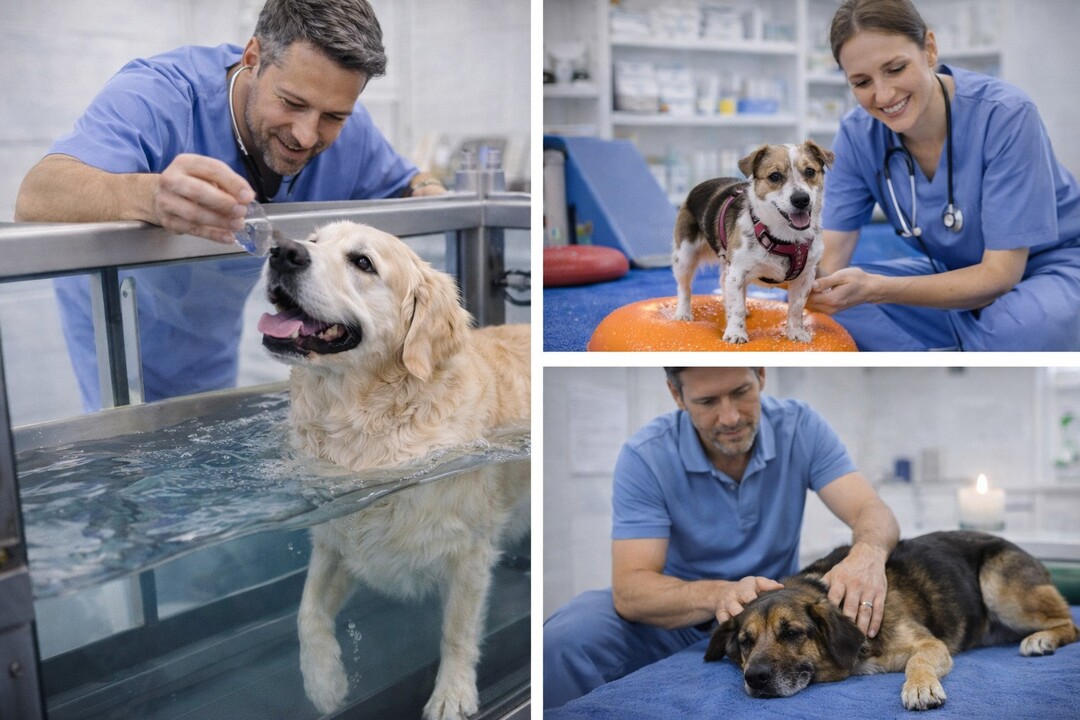
Rehab looks simple to your pet. It feels like slow, careful play. To your care team, it is a planned mix of movement and support. Each step has a clear goal. You protect healing tissue. You also build strength in safer ways.
Common rehab tools include three main groups.
- Movement therapy. Guided walks, step work, and balance boards teach safe use of sore legs.
- Water therapy. An underwater treadmill uses water to support weight. Your pet moves joints without a full load.
- Manual care. Stretching and a simple massage ease stiff muscles. They help blood flow into sore spots.
Your vet may also use heat or cold packs. Your pet may get simple home tasks like short leash walks, weight shifting, or sit-to-stand moves. You do not need special gear. You need clear steps and steady follow-through.
Why Hospitals Are Building Rehab Units
Hospitals add rehab for three main reasons. You see better outcomes after surgery. You see less long-term pain from arthritis. You also see stronger trust between you and your care team.
After surgery, careful movement lowers the risk of stiff joints and weak muscles. Your pet uses the limb sooner. That early use cuts the risk of strain on the other legs. Over time, this can mean fewer new injuries.
With arthritis, rehab gives structure. You move from “rest and pain pills” to a plan that includes strength, weight control, and home changes like rugs and ramps. That plan offers you a sense of control. You are not only waiting for pain to rise.
Hospitals also see rehab as a way to meet current standards of care. The University of Tennessee and other schools train vets in rehab methods.
How Rehab Compares To Standard Rest
Many people grew up hearing “crate rest and time” for most injuries. Today, vets know that smart, guided motion often works better than full rest. The table below gives a simple comparison.
| Care approach | What it looks like | Short term effect | Long term effect
|
|---|---|---|---|
| Standard rest only | Crate time with short trips outside | Less strain on the injury | Higher risk of weak muscles and stiff joints |
| Rehab with guided motion | Planned walks, simple tasks, and checks | Controlled use of sore limb or back | Stronger support muscles and better joint use |
| Rehab plus weight control | Food plan and activity plan together | Steady weight loss with joint support | Less joint load and fewer pain spikes |
What You Can Expect For Your Pet
A rehab plan starts with a clear exam. Your vet checks joint range, pain points, and how your pet stands and walks. You may see your pet walk on different surfaces. You may see the team feel along the spine and legs. This can stir strong emotion when you see your pet flinch. It also gives a clear map of what needs care.
Next, your team sets three kinds of goals.
- Short-term goals. Ease sharp pain and protect healing tissue.
- Midterm goals. Restore daily actions like stairs or car entry.
- Long-term goals. Keep strength and slow joint wear.
You then get a written plan. It lists clinic visits and home tasks. It also gives warning signs that need a call. You know how effort should feel. You also know when to stop.
How You Can Help At Home
Your role is central. Your pet needs you to carry the plan into daily life. You can help in three key ways.
- Protect the home space. Use rugs on slick floors. Block the stairs until your vet clears them. Use ramps for cars and beds.
- Follow the exercise plan. Keep walks short and steady. Use the leash. Count the reps for each task. Stop if your pet limps more or pants hard.
- Watch for changes. Write down pain signs, night rest, and appetite. Share this record at each visit.
These small acts can ease your pet’s fear. They also cut your own stress. You hold a clear script instead of guessing each day.
When To Ask About Rehab
You can ask about rehab at any stage. You do not need to wait for a crisis. Ask your vet if your pet:
- Lies down more and plays less
- Struggles with stairs or jumping into the car
- Has surgery planned or just finished it
- Shows a limp that comes and goes
Early help often means shorter rehab and fewer limits later. You may feel guilt for not seeing the signs sooner. That feeling is common. You can still change the path now. Your choice to ask for rehab can bring your pet back to steady, safe movement and calmer days at home.