Table of Contents
When your pet stops eating, gains weight, or seems tired, you feel alarmed. Food is not just fuel for your pet. It shapes mood, healing, and life span. Nutrition counseling at animal hospitals gives you clear answers when you feel unsure and stressed. You learn what to feed, how much, and how often. You also learn what to avoid. This support matters when your pet has diabetes, kidney trouble, allergies, or stomach issues. Care teams use nutrition plans to ease pain, support treatment, and prevent new problems. You do not have to guess or rely on labels and trends. Instead, you work with trained staff who know how food affects the body. If you visit a veterinarian in Groves, TX, you can ask for nutrition counseling as part of regular care, not as a last resort.
Why Food Choices Matter For Your Pet
Food affects every part of your pet’s body. Wrong food can cause slow weight gain, itching, stomach trouble, or joint pain. The right food can calm those same problems.
Nutrition counseling at an animal hospital focuses on three goals.
- Support daily energy and comfort
- Help medical treatment work better
- Lower the risk of new disease
Research from veterinary nutrition guidance shared by the AVMA stresses that planned nutrition is part of medical care, not a side topic. Good food choices help your pet’s heart, kidneys, skin, and brain. Poor food choices strain them.
What Happens During Nutrition Counseling
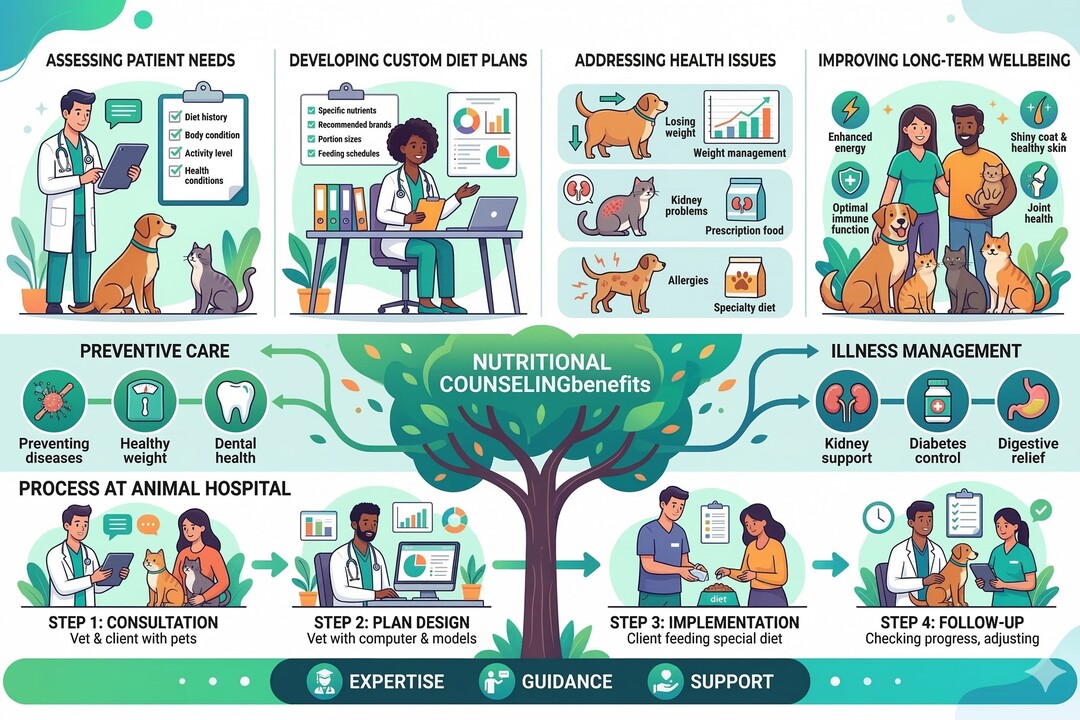
A nutrition visit at an animal hospital is simple. It focuses on facts, not blame. Staff know that feeding a pet can feel confusing and heavy.
You can expect three main steps.
- History. You share what your pet eats each day. This includes treats, table scraps, chews, and supplements.
- Checkup. The team checks weight, body shape, coat, and teeth, and performs lab tests if needed.
- Plan. You leave with clear feeding steps you can follow at home.
The goal is to fit the plan into your life. Staff can adjust for busy schedules, budgets, and family habits. They work with you, not against you.
Common Problems Nutrition Can Help
Many pet problems are linked to food. Some are obvious. Others hide behind vague signs like “slowing down.”
Nutrition counseling can support pets with three common conditions.
- Obesity. Extra weight stresses joints, the heart, and breathing. A planned diet with measured portions can bring steady weight loss.
- Diabetes. Timing and type of food can affect blood sugar. A steady feeding plan helps insulin work better.
- Kidney disease. Special diets can reduce strain on the kidneys and support longer comfort.
Other issues include food allergies, chronic diarrhea, constipation, bladder stones, and heart disease. Many of these need prescription diets or strict rules about treats. A hospital team can explain the “why” behind each rule so it feels worth the effort.
Comparing Common Feeding Approaches
Many families feel lost in pet food claims. Labels can sound strong, but leave you with more questions. Nutrition counseling helps you sort through these claims using science instead of marketing.
| Feeding Approach | Possible Benefits | Common Risks Or Limits | When To Use Nutrition Counseling
|
|---|---|---|---|
| Over-the-counter dry or canned food | Easy to find. Wide price range. Many pets do well on it. | Labels can mislead. May not fit pets with disease. | To confirm food meets your pet’s life stage and health needs. |
| Prescription or therapeutic diet | Formulated for specific diseases. Backed by clinical data. | Higher cost. Needs strict feeding control at home. | To match diet to lab results and adjust as disease changes. |
| Home-cooked diet | Control over ingredients. Helpful for some allergies. | High risk of missing key nutrients. Time consuming. | To use a recipe designed by a board-certified nutrition expert. |
| Raw diet | Some owners feel it is “natural.” | Risk of harmful bacteria. Possible broken teeth or blockages from bones. | To review safety concerns and safer options for similar goals. |
Guidance from the U.S. Food and Drug Administration warns that raw pet foods often carry bacteria that can harm both pets and people. A hospital team can walk through those risks and suggest safer choices.
How Nutrition Supports Different Life Stages
Pets need different food at different ages. A single diet for life rarely fits.
- Puppies and kittens. Need food that supports growth and strong bones.
- Adult pets. Need steady calories to maintain weight and muscle.
- Senior pets. Often need fewer calories and support for joints, kidneys, and brain function.
Nutrition counseling helps you shift at the right time. You avoid sudden changes that upset the stomach. You also avoid waiting too long to adjust when your pet slows down or loses muscle.
What You Can Do At Home Today
You can start with three simple steps before your next visit.
- Measure every meal with the same cup. Do not free feed from a full bowl.
- Write down all treats and extras for one week.
- Check your pet’s waist from above and from the side. Look for a gentle curve, not a straight line.
Bring this information to your animal hospital. It gives the team a clear picture of daily life. That makes the plan more accurate and more personal.
Why Nutrition Counseling Belongs In Routine Care
Nutrition counseling is not only for sick pets. It belongs in yearly checkups and vaccine visits. Regular talks about food can help catch weight gain early. They can also reveal early signs of disease that you may not notice at home.
When you treat food as part of medical care, you give your pet a stronger chance at a longer and more comfortable life. You also gain peace of mind. You know you are not guessing. You are making choices backed by science and guided by people who study animal health every day.