Table of Contents
You probably think of the dentist when something hurts. That quiet delay can cost you time, money, and peace of mind. Preventive dentistry stops small problems before they become emergencies. It keeps your teeth strong, your gums steady, and your body safer from infection. Every cleaning, exam, and X-ray gives you early warning. It also gives you control. You learn what puts you at risk and what protects you. That means fewer surprises and fewer hard choices later. A Silver Spring, MD family dentist does more than fix cavities. The dentist tracks slow changes, explains what they mean, and helps you act early. You get clear steps. You also get steady support. Preventive care is not a luxury. It is basic protection, like a seat belt or smoke alarm. Once you understand what it can stop, you will never see a “simple checkup” the same way again.
How Preventive Dentistry Protects Your Whole Body
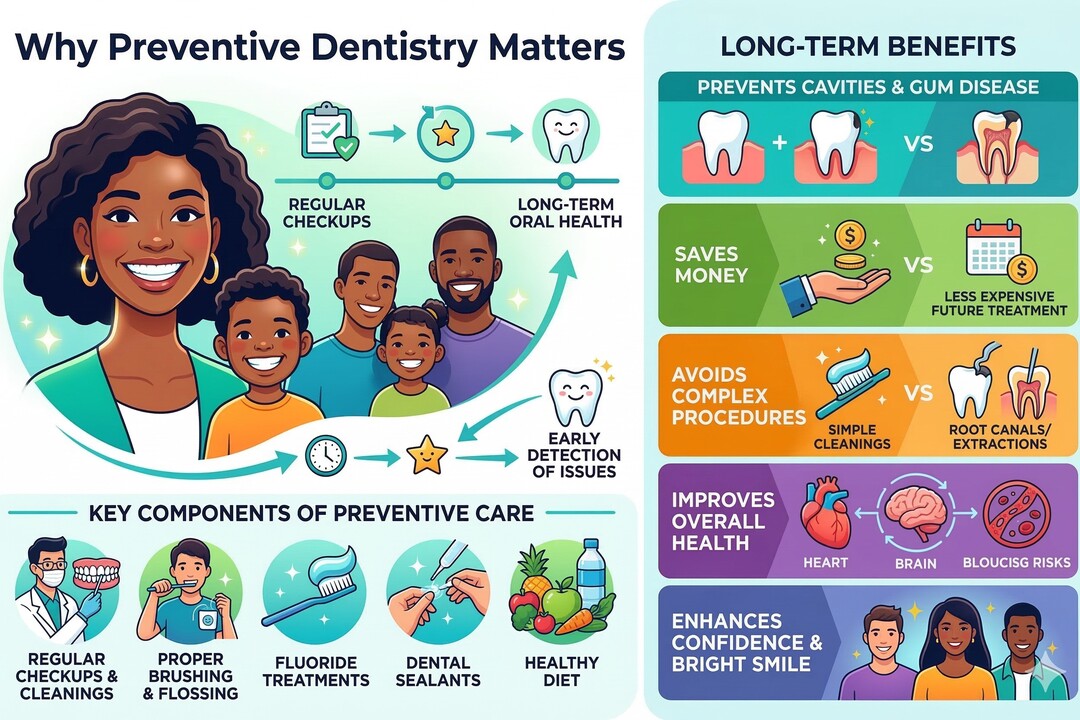
Preventive care guards more than your smile. It also lowers the strain on your heart, lungs, and immune system. Gum disease links to heart disease, stroke, and diabetes. Infection in your mouth can spread through your blood. Regular care cuts that risk.
Routine visits let your dentist spot three key problems early.
- Cavities before they reach the nerve
- Gum disease before teeth loosen
- Suspicious spots that could mean oral cancer
Early care is simpler. It also hurts less and costs less. The Centers for Disease Control and Prevention reports that untreated decay is common in children and adults. Many of those teeth could stay healthy with cleanings, fluoride, and sealants.
What Counts As Preventive Dentistry
Preventive dentistry is any step that protects healthy teeth and gums or stops early damage from getting worse. It includes three groups of habits.
- Home care
- Office care
- Healthy choices every day
At home, you brush, floss, and use fluoride. At the office, you get cleanings, exams, and X-rays when needed. In daily life you watch sugar, tobacco, and alcohol. Each part supports the others. If one slips, the others must work harder.
Home Habits That Matter Every Single Day
You spend a few hours a year in a dental chair. You spend thousands of hours at home. What you do there decides most of your oral health.
Strong home care includes three simple steps.
- Brush twice a day with fluoride toothpaste
- Floss once a day to clean between teeth
- Limit sugary drinks and snacks, especially between meals
The National Institute of Dental and Craniofacial Research shows that tooth decay affects people of every age. Fluoride and daily cleaning slow down that damage. You control most of that protection yourself.
Why Regular Dental Visits Are Non‑Negotiable
You might skip visits when life feels crowded. You might wait because you feel nervous. That delay can turn a small cavity into a root canal. It can turn mild gum bleeding into tooth loss.
Routine visits usually include three parts.
- A cleaning to remove plaque and hard tartar
- An exam to check teeth, gums, and soft tissue
- X-rays, when needed to see between teeth and under fillings
Your dentist also checks your bite, jaw joints, and signs of clenching or grinding. Those checks help prevent cracked teeth and headaches.
Cost Of Prevention Compared To Cost Of Treatment
Many people avoid the dentist because of cost. That choice often leads to higher bills later. Preventive care is usually much cheaper than repair. It also saves time and stress.
| Service | Purpose | Typical Frequency | Relative Cost Level
|
|---|---|---|---|
| Routine exam and cleaning | Prevent disease and catch problems early | Every 6 to 12 months | Low |
| Fluoride treatment | Strengthen enamel and reduce decay | Every 6 to 12 months | Low |
| Sealants for back teeth | Block food from deep grooves | Every few years for growing children | Low to medium |
| Filling | Repair small to moderate cavity | As needed | Medium |
| Root canal and crown | Treat deep infection and save tooth | As needed | High |
| Tooth removal and replacement | Address severe damage or loss | As needed | Very high |
Most plans cover exams, cleanings, and basic X-rays at a higher rate than major work. Even without insurance, two cleanings and exams usually cost less than one urgent visit for pain.
Preventive Dentistry For Children And Teens
Childhood habits shape lifelong health. When you start early, you lower fear and build trust. You also protect growing teeth while the enamel is still soft.
For children, you can focus on three steps.
- First dental visit by age one or within six months after the first tooth
- Fluoride toothpaste in a rice grain amount for young children and a pea size for older children
- Sealants on permanent molars once they come in
Regular visits help your dentist guide jaw growth and watch for crowding. Early action can shorten or even prevent braces.
Preventive Dentistry For Adults And Older Adults
Adult teeth face different threats. Work stress, medicines, and chronic disease all affect your mouth. Many medicines dry your mouth. That dryness raises your cavity risk.
If you are an older adult, you may face three extra challenges.
- Receding gums that expose the root surface
- Difficulty brushing or flossing because of grip or vision problems
- Higher risk of oral cancer
Your dentist can suggest tools like electric brushes, floss holders, and fluoride rinses. Early screening for oral cancer can save your life. That exam takes only a few minutes during a regular visit.
When To Call Your Dentist Sooner
Preventive care also means speaking up when something feels wrong. Do not wait for severe pain. Reach out if you notice three warning signs.
- Bleeding gums when you brush or floss
- Sensitivity to cold, heat, or sweets that lingers
- Sores, lumps, or patches in your mouth that do not heal in two weeks
Quick checks often lead to simple fixes. Delay often leads to serious damage. You deserve quick relief and clear answers.
Taking Your Next Step Today
Preventive dentistry is steady protection. It guards your mouth, your wallet, and your sense of control. You reduce pain. You cut surprise bills. You also protect your heart and body.
Set three clear goals now.
- Schedule your next exam and cleaning
- Brush and floss every day without skipping
- Cut sugary drinks to special moments instead of every day
Small steps, repeated often, create strong teeth. Your future self depends on the choices you make today.